
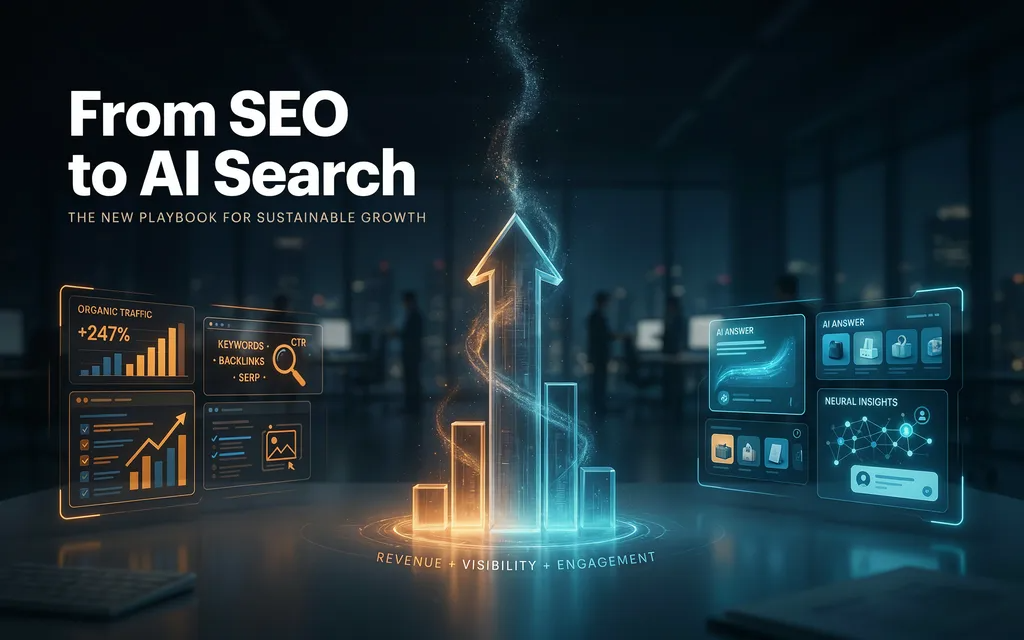
From SEO to AI Search: The New Playbook for Sustainable Online Growth
The way people search for information online is changing rapidly. For years, businesses focused on traditional search engine optimization (SEO) to improve rankings and attract visitors from Google and other search engines. While SEO remains a critical part of digital marketing, the rise of artificial intelligence is transforming how users discover information, evaluate brands, and make decisions.
Today, many businesses are working with a GEO company to prepare for this new era of search. GEO, or Generative Engine Optimization, helps businesses improve visibility not only in traditional search results but also within AI-powered search experiences that provide direct answers, summaries, and recommendations.
The Evolution of Search
Search engines have changed significantly over the years.
In the early days, ranking success often depended heavily on keywords and backlinks. Over time, search engines became smarter and began focusing more on user intent, content quality, and overall website experience.
Now, artificial intelligence is taking search to another level.
Modern AI-powered search tools can:
- Understand natural language
- Interpret complex questions
- Generate direct responses
- Summarize information from multiple sources
- Deliver more personalized search experiences
Instead of simply presenting a list of links, search platforms increasingly provide answers directly to users.
This shift is creating a new set of opportunities and challenges for businesses.
Why Traditional SEO Is Still Important
Despite the rise of AI-powered search, traditional SEO remains essential.
Businesses still need strong foundations such as:
- Technical website optimization
- High-quality content
- Fast page loading speeds
- Mobile-friendly experiences
- Keyword research
- User-focused design
These elements help search engines understand websites and determine their relevance.
Strong SEO also supports credibility and authority, which continue to play an important role in both traditional and AI-driven search environments.
Businesses that neglect SEO fundamentals may struggle to maintain visibility regardless of how search evolves.
The Rise of AI Search
AI-powered search is changing user expectations.
People increasingly ask complete questions instead of typing short keyword phrases.
For example:
- “What is the best project management software for small businesses?”
- “How can I improve my website traffic?”
- “What are the benefits of AI-powered SEO?”
AI systems analyze these questions and generate detailed responses using information gathered from trusted sources.
This means businesses must think beyond traditional rankings and focus on becoming authoritative sources of information that AI systems can recognize and reference.
What GEO Brings to Modern Marketing
Generative Engine Optimization focuses on helping businesses remain visible in AI-driven search experiences.
Unlike traditional SEO, which primarily targets rankings, GEO focuses on increasing the likelihood that content will be included in AI-generated answers.
This often involves:
- Creating comprehensive content
- Structuring information clearly
- Demonstrating expertise
- Building authority
- Aligning content with user intent
The goal is to ensure that a brand remains discoverable even as search experiences continue to evolve.
Creating Content for Humans and AI
One of the biggest changes in modern search is the need to create content that serves both users and AI systems.
Successful content should:
- Answer real questions
- Provide accurate information
- Be easy to understand
- Cover topics thoroughly
- Offer genuine value
AI systems tend to favor content that is clear, reliable, and well-organized.
At the same time, human readers still expect engaging and useful information.
Businesses that balance these priorities are more likely to succeed in future search environments.
Building Authority in a Changing Landscape
Authority has always been important for SEO, but it is becoming even more valuable as AI search grows.
Search engines and AI systems increasingly prioritize trustworthy sources.
Businesses can strengthen authority by:
- Publishing expert content
- Maintaining accurate information
- Earning quality backlinks
- Demonstrating industry knowledge
- Providing positive user experiences
These efforts help establish credibility and improve visibility across both traditional search results and AI-generated responses.
Authority is becoming one of the most valuable assets in digital marketing.
Using Data and AI to Improve Strategy
Artificial intelligence is not only changing search results—it is also changing how businesses approach optimization.
Modern AI-powered tools can help businesses:
- Analyze large amounts of data
- Identify emerging trends
- Discover content opportunities
- Monitor competitor activity
- Understand user behavior
According to the AI SEO services offered by Unique Logic, combining advanced technology with strategic SEO planning helps businesses adapt more effectively to changing search environments.
This approach allows organizations to make smarter decisions and improve overall search performance.
Why Adaptation Matters
Technology changes quickly, and customer behavior changes with it.
Businesses that fail to adapt may experience:
- Reduced visibility
- Lower traffic
- Decreased engagement
- Lost opportunities
On the other hand, businesses that embrace innovation often gain a significant competitive advantage.
By preparing for the future today, companies can position themselves as leaders in their industries and remain visible regardless of how search continues to evolve.
Conclusion
Search is entering a new era shaped by artificial intelligence, generative search experiences, and changing user expectations. While traditional SEO remains a critical foundation, businesses must also prepare for the growing influence of AI-powered search.
Working with an experienced GEO company can help organizations adapt to these changes by combining proven SEO principles with modern optimization strategies designed for AI-driven environments.