
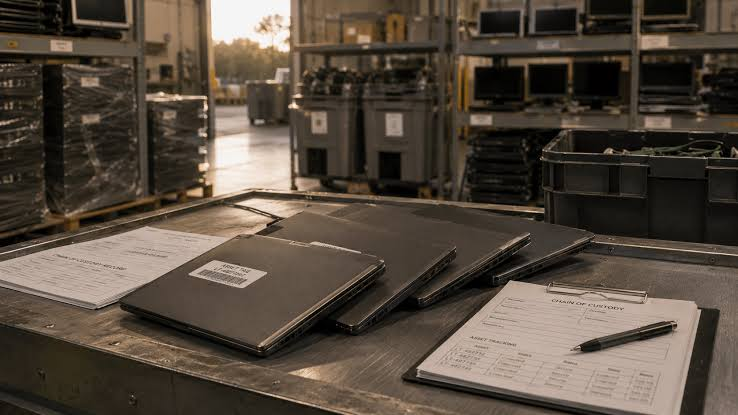
How Secure Data Destruction Protects Businesses When Retiring IT Equipment
All businesses eventually eliminate outdated information technology equipment. Computers wear out. Servers are replaced. And hard drives pile up in closets and storage rooms. Here is the dilemma, however: most of the equipment still contains sensitive information even after it has been erased.
This is where secure data destruction comes into play. It is not just a technical afterthought; it is vitally important in protecting your organization from data breaches, lawsuits, and fines.
Deleting Files Is Not the Same as Destroying Data
Several businesses believe that when they erase files or format their hard drive, the data is gone. This is not the case because deleting a file merely means the pointers to it in the file system have been removed. The actual information remains intact on the disk, which means it can be restored by any person with basic software.
According to research done by Blancco Technology Group, 42% of the secondhand hard drives sold online still contained personal or business information that could be retrieved. This means that almost half of the hard drives that were supposed to be wiped of any data still contained confidential information.
This is why proper methods to erase data are very important.
The Real Cost of Getting This Wrong
Not following secure IT disposal protocols leaves you open to a data breach, and possibly hinders the financial capability and reputation of your company.
IBM’s 2025 Cost of a Data Breach Report reveals that businesses incur costs of $4.44 million on average from breaches. Even worse, some cases get far more expensive.
For instance, Morgan Stanley was fined $60 million by a regulatory body for improper decommissioning of data center assets. The company didn’t erase hard drives of decommissioned servers, and the information of customers was leaked.
Advocate Medical Group paid a $5.55 million settlement for losing unencrypted laptops containing data of 4 million patients. In each of these incidents, the devices were not the problem; their lack of learning and improper erasure are the root cause.
The regulatory authorities confirm the need to be mindful of proper IT disposal. As per Gartner studies, there are about 30% of IT assets that get lost during disposal.
Why Businesses Need Professional Data Destruction Services
Hackers don’t only break into networks from the outside. Sometimes they simply wait for a business to throw away or resell old equipment. That’s why working with professional data destruction services is one of the smartest moves a business can make when retiring IT equipment.
Choosing a provider with recognized certifications, such as NAID AAA, adds another layer of assurance. It means the provider follows strict, audited standards for secure destruction.
Building a Simple IT Disposal Policy
Companies do not require a complex system to keep safe. A basic policy would be useful.
First, keep track of all devices, from the time of purchase to the time of disposal. You should know what system you are using and where it is located. When the device is not working anymore, go through the appropriate process of destruction or erasure.
Keep a record of the destruction of each device, along with the date and the method used. This will be helpful for you if the regulatory bodies or your customers must ask you questions in the future.
Final Thoughts
Getting rid of old IT equipment is more than just a matter of cleaning out the office. It’s a matter of security and finances. Secure data destruction safeguards businesses against any breaches, penalties, and possible reputational losses that may take years to fix.
In any case, regardless of whether you need hard drive destruction, verified data deletion service, or complete IT asset management, the idea remains unchanged: wherever the equipment goes, so should the data.