
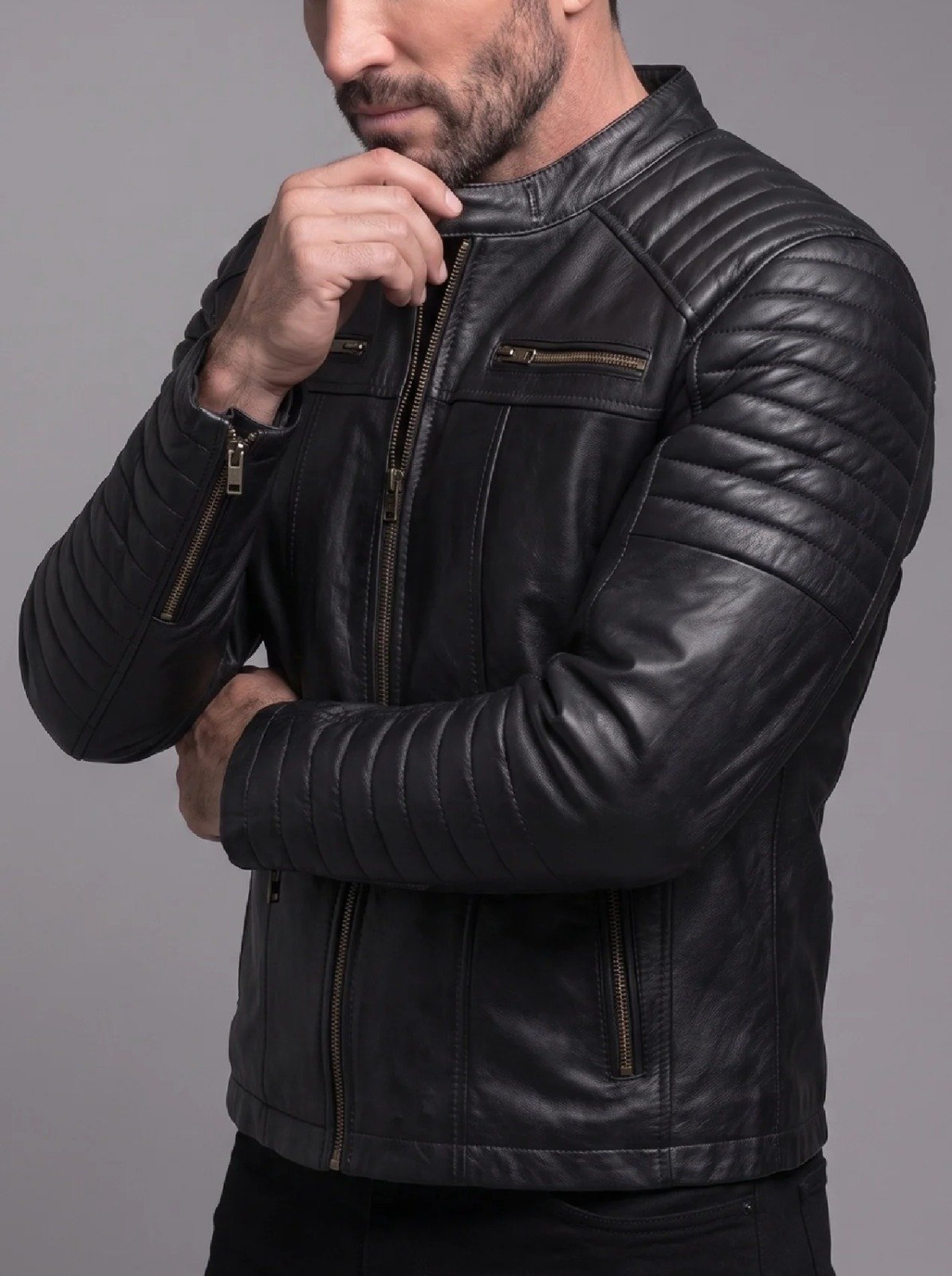
A black leather jacket is one of the most versatile pieces of clothing we can own. It combines timeless style, durability, and everyday practicality, making it a reliable choice for casual outfits, smart-casual looks, and modern streetwear. However, when shopping for one, we often face a common question: How much should we actually pay for a black leather jacket?
Prices vary considerably depending on the type of leather, construction quality, brand reputation, design, and place of purchase. Some jackets cost less than $100, while others sell for several hundred dollars or more. Understanding these differences helps us make a better purchasing decision without spending money on features that do not match our needs.
In this Black Leather Jacket price guide, we explore typical price ranges, leather materials, quality indicators, brand considerations, and practical shopping tips. Whether we are purchasing our first leather jacket or upgrading an existing wardrobe, knowing what determines its value allows us to find the right balance between price, quality, and personal style.
How Much Does a Black Leather Jacket Cost?
The price of a Black leather jacket depends primarily on its material, craftsmanship, and overall design. Genuine leather jackets generally cost more than synthetic alternatives because animal hides require additional processing, and quality leather can provide excellent durability when properly maintained.
We can divide the market into several broad price categories.
| Price range | Typical characteristics | Best suited for |
| Under $100 | Basic synthetic leather or entry-level genuine leather | Occasional wear and budget-conscious shoppers |
| 100–200 | Better synthetic materials or entry-level genuine leather | Everyday casual outfits |
| 200–400 | Quality genuine leather, better construction, and improved finishing | Regular wear and long-term use |
| 400–800 | Higher-grade leather, detailed construction, and specialist designs | Buyers seeking craftsmanship and distinctive styling |
| $800+ | Designer pieces, specialist leatherwork, and premium brand positioning | Collectors and shoppers prioritising particular labels or craftsmanship |
These ranges are approximate rather than fixed. Prices differ by country, retailer, currency, taxes, and seasonal promotions. A jacket priced at $300 is not automatically better than one costing $200. We should always evaluate the material, construction, fit, and expected lifespan before making a final decision.
1. Genuine Leather vs. Faux Leather: Which Offers Better Value?
One of the most important decisions we make when buying a black leather jacket is choosing between genuine leather and faux leather.
Both materials can create attractive jackets, but they differ in texture, maintenance, durability, and long-term value.
Genuine Leather Jackets
Genuine leather is made from animal hide, usually cowhide, lambskin, or sheepskin. Its appearance and feel depend on the animal, tanning process, finishing method, and grade of the material.
Cowhide is commonly chosen for its strength and structured appearance. Lambskin is generally softer and lighter, making it suitable for sleek, fitted designs. Sheepskin can offer a comfortable balance of softness and durability, depending on its construction.
A quality genuine leather jacket can develop character through regular use. With appropriate care, it may remain wearable for many years.
However, genuine leather is not automatically high quality. Thin leather, weak stitching, poor finishing, and inferior hardware can reduce a jacket’s useful life regardless of its price.
Faux Leather Jackets
Faux leather is a synthetic alternative designed to resemble animal leather. It is commonly made using polyurethane (PU) or polyvinyl chloride (PVC) coatings over a textile backing.
These jackets are often less expensive and provide a wide variety of finishes, colours, and contemporary designs. They can be a practical choice for shoppers who want the appearance of a black leather jacket without the cost of natural leather.
Their main limitation is that some synthetic coatings may crack, peel, or deteriorate with repeated wear, heat, and moisture. Quality varies significantly between products.
For shoppers prioritising affordability or avoiding animal-derived materials, a well-made faux leather jacket can be a suitable option.
Our buying advice: We should compare the actual material and construction rather than relying on labels alone. A carefully constructed synthetic jacket may offer better value for occasional use than a poorly made genuine leather jacket.
2. What Determines the Price of a Black Leather Jacket?
Several factors influence the price of a black leather jacket. Understanding them makes it easier to distinguish meaningful quality differences from branding or decorative details.
Leather Type and Quality
The type of leather is one of the biggest pricing factors.
Full-grain leather retains the hide’s natural outer surface and may display natural markings. It is often valued for its strength and ability to develop a distinctive appearance over time.
Top-grain leather has had its outer surface processed to create a more uniform finish. Depending on its quality and construction, it can provide an attractive balance of appearance, durability, and comfort.
Other leather products may use split leather or heavily corrected surfaces. These can serve different price points, but the specific finishing and manufacturing methods matter.
We should remember that terminology alone does not establish quality. Leather thickness, tanning, flexibility, finishing, and the manufacturer’s workmanship all contribute to the finished product.
Stitching and Construction
A jacket’s stitching affects both its appearance and structural integrity. Straight, consistent seams are generally a positive sign, while loose threads, uneven panels, and poorly reinforced stress points may indicate weaker construction.
We should pay particular attention to the shoulders, armholes, pockets, cuffs, and main zipper area. These sections experience regular movement and tension.
A well-constructed jacket should feel balanced when worn. Its panels should sit naturally, and the lining should not bunch excessively during movement.
Zippers, Buttons, and Other Hardware
Hardware may seem like a minor detail, but it influences everyday usability.
A reliable zipper should move smoothly without catching the leather or lining. Buttons, snaps, and buckles should feel secure rather than loose or poorly attached.
Motorcycle-inspired jackets may feature multiple zippers, metal studs, belts, and reinforced details. These additions can increase manufacturing costs, although extra hardware does not necessarily mean better overall quality.
Brand Reputation
Established brands may charge more because of their design identity, manufacturing standards, distribution costs, or customer recognition.
Designer labels can also command substantial prices for distinctive silhouettes and branding. However, a higher retail price does not always translate into a longer-lasting jacket.
We should determine whether we are paying for superior materials, specialist construction, a particular design, or the brand name itself.
3. Black Leather Jacket Prices by Style
Leather Makers Black leather jackets are available in several silhouettes, each offering a different appearance and level of practicality.
A leather blazer combines traditional tailoring with leather construction. Its structured shape can complement trousers, knitwear, ad polished footwear. Better tailoring and softer leather can contribute to a higher price.
These are illustrative market estimates, not verified live offers. Actual prices depend on material, brand, location, and retailer.
4. Is an Expensive Black Leather Jacket Worth It?
An expensive black leather jacket can be a worthwhile investment, but only when its quality and features justify the price.
For example, a jacket costing $350 may offer well-selected leather, durable stitching, a comfortable lining, and a versatile design. If we wear it frequently and maintain it properly, its cost per wear may be relatively low.
By comparison, a cheaper jacket may require replacement sooner if its coating peels, its seams fail, or its fit becomes uncomfortable.
Nevertheless, we should not assume that every expensive jacket offers exceptional value. Some high-priced products charge substantially more for branding, limited availability, or fashion-driven details.
Before paying a premium, we should ask three questions:
- Does the material justify the price? Look for clear information about the leather or synthetic material used.
- Is the construction reliable? Examine stitching, lining, seams, zippers, and finishing.
- Will we wear it regularly? A classic design that suits our wardrobe is often more useful than an expensive trend-driven purchase.
When these factors align, spending more can make sense. When they do not, a moderately priced jacket may be the smarter choice.
5. How to Choose the Right Black Leather Jacket on a Budget
A limited budget does not mean we must sacrifice style. We can make a more effective purchase by prioritising the features that matter most.
Set a Realistic Spending Limit
Start by deciding how much we can comfortably spend. If our budget is around $100, we may need to focus on synthetic leather or entry-level genuine leather. A budget of 200–350 may provide more options for well-made everyday jackets.
These are starting points, not guarantees of quality. We should compare individual products rather than assuming a particular price automatically provides a particular standard.
Choose a Versatile Design
A simple black jacket without excessive decoration is usually easier to style across different occasions.
Minimalist café racer jackets, classic bombers, and traditional biker jackets can all work with a variety of outfits. Choosing a versatile silhouette also reduces the risk of buying something that feels outdated after one season.
Compare Product Details
When shopping online, check the product description carefully. Look for the leather type, lining material, available measurements, closure details, care instructions, and return policy.
If the seller describes a product only as “premium leather” without specifying the material, we should seek clarification before purchasing.
Shop During Seasonal Sales
End-of-season promotions and clearance sales can offer opportunities to purchase quality jackets at reduced prices.
However, we should compare the final price with similar products instead of relying on the advertised discount alone. A large percentage reduction does not necessarily make a product good value.
6. Finding the Right Fit for Your Money
Fit is one of the most important aspects of a leather jacket because the material generally has less stretch than knitted fabrics.
The shoulders should align naturally with our body, and the sleeves should allow comfortable movement. The jacket should close without pulling excessively across the chest or abdomen.
We should also consider what we plan to wear underneath it. A fitted café racer may work well over a T-shirt, while a slightly roomier bomber may be more suitable for layering over a sweatshirt.
When buying online, check the garment measurements rather than relying entirely on standard S, M, L, or XL labels. Sizing varies between manufacturers and styles.
A moderately priced jacket that fits properly is usually a better purchase than an expensive one that feels uncomfortable or requires costly alterations.
7. Black Leather Jacket Prices for Men and Women
Black leather jackets are available in men’s, women’s, and unisex designs. Although prices overlap considerably, differences in tailoring, materials, and design details can influence individual products.
Men’s styles often include boxier bombers, structured café racer jackets, and traditional biker silhouettes. Women’s designs may feature cropped lengths, shaped waists, oversized fits, or more tailored shoulders.
These are design tendencies rather than strict rules. Either category can offer a wide range of fits.
We should compare jackets according to measurements, construction, and material instead of assuming that one category is automatically more expensive or better made.
8. How to Make a Black Leather Jacket Last Longer
The value of a leather jacket depends partly on how we care for it. Even a well-made product can deteriorate prematurely if it is stored incorrectly or exposed to unsuitable cleaning methods.
For genuine leather, we should follow the manufacturer’s care instructions and use products appropriate for the specific leather finish.
Useful habits include:
- Store it on a broad, sturdy hanger to help maintain its shoulder shape.
- Keep it away from prolonged direct sunlight to reduce the risk of fading and drying.
- Allow it to dry naturally if it becomes wet, away from radiators and direct heat.
- Clean surface dirt gently using a method suitable for the material.
- Avoid excessive moisture and unsuitable chemicals, which may damage leather finishes.
- Condition genuine leather only when appropriate for its type and finish, following the manufacturer’s recommendations.
Faux leather requires different care. Strong solvents, abrasive cleaning, and excessive heat can damage its surface coating.
With appropriate maintenance, we can protect our purchase and reduce the need for premature replacement.
9. Is a Black Leather Jacket a Good Long-Term Investment?
A black leather jacket can provide excellent long-term wardrobe value when it suits our lifestyle and is made from appropriate materials.
Black is relatively easy to coordinate with neutral colours, denim, knitwear, and casual footwear. A classic silhouette can remain wearable across changing fashion trends, making it more versatile than highly seasonal designs.
However, not every jacket should be considered a financial investment. Most jackets do not appreciate in value, and resale prices depend on condition, brand, demand, authenticity, and availability.
It is more useful to think of a leather jacket as a long-term clothing purchase rather than an asset expected to generate a financial return.
To estimate cost per wear, we can divide the purchase price by the number of times we expect to wear the jacket.
For example, a $240 jacket worn 120 times costs $2 per wear. If we wear it 240 times, the cost falls to $1 per wear.
This simple calculation helps us compare products based on actual use instead of the initial price alone.
10. Common Mistakes to Avoid When Buying a Black Leather Jacket
Several purchasing mistakes can lead to unnecessary spending or disappointment.
Assuming Genuine Leather Always Means Better Quality
Genuine leather describes a material category, not a universal quality standard. We must still evaluate its finish, construction, thickness, and overall workmanship.
Choosing Style Over Comfort
An attractive jacket is less useful if it restricts movement or does not suit our wardrobe. We should check the fit and consider how often we will wear it.
Ignoring the Return Policy
Online product photographs cannot fully communicate texture, weight, or fit. A clear return policy provides important protection when the jacket does not meet our expectations.