
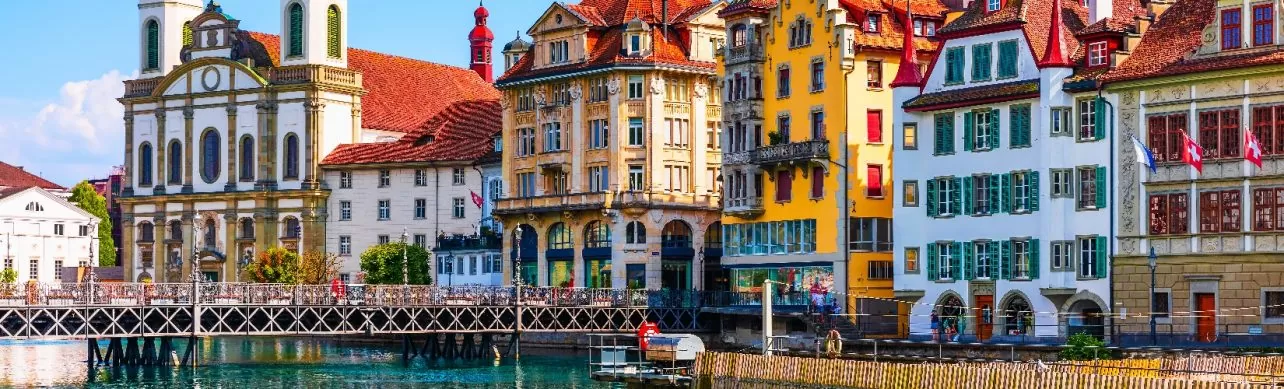
Switzerland is one of the most attractive places in Europe to start a new life. It offers political stability, a strong economy, a safe environment and some of the best healthcare and education in the world. Parents choose it for its universities, professionals for high salaries, and entrepreneurs for its predictable tax system and reliable banks.
Moving there is not a single process, though. There is no one-size-fits-all visa: the right route depends on whether you are an employee, a founder, a wealthy investor, a student, a pensioner or a family member joining someone already there. Most routes need approval from the canton where you will live before the federal authorities decide.
Why People Choose Switzerland
The reasons are simple: quality of life, with low crime and efficient public services; careers, with low unemployment and strong finance, pharmaceutical and technology industries; business, with protected property rights and the respected “Swiss made” label; education, with excellent schools and universities including ETH Zurich; and location, in the heart of Europe, with visa-free travel to 29 Schengen countries.
Seven Routes to Move to Switzerland
Work is the most common route. Switzerland uses permits rather than visa names. Permit L is a short-term work permit valid for up to 12 months, tied to one employer and one canton. Permit B is the standard residence permit for workers with a contract of 12 months or longer, valid for 12 months and renewable. Permit C grants permanent residence, usually after 5 to 10 years, and Permit G is for cross-border workers. For a Permit B, the employer must justify hiring a foreigner and win approval from the canton and the federal State Secretariat for Migration (SEM) before the employee applies at the consulate.
Business investment is the route for entrepreneurs. You must register or acquire a local company that creates new jobs and contributes to the local economy. The law sets no fixed minimum investment, but you must show the canton enough funds to invest, hire staff and keep the company running. The key document is a strong business plan, backed by market analysis and proof of funds. Successful applicants receive a Permit B for one year.
Wealthy non-EU and non-EFTA nationals can use the investor route, known as lump-sum taxation. Instead of tax on worldwide income, you pay an annual fixed tax agreed with the canton, at least CHF 200,000 to 250,000 per year. This also leads to a Permit B, valid for one year and renewable.
There is no separate visa for self-employed people. A freelancer from outside the EU and EFTA can apply for a Permit B after registering as a sole trader, but only with a business plan showing the work will benefit the canton and proof of sufficient funds. EU and EFTA freelancers can receive a five-year permit at once, while many expats from third countries wait until they hold permanent residence.
Students must enrol in a full-time programme at a Swiss university, then apply for a Category D visa at the consulate at least three to five months before moving. They need an enrolment letter, proof of tuition payment, proof of at least CHF 21,000 per year for living expenses, proof of accommodation, a motivation letter, insurance and a police certificate. On arrival, they must register with the cantonal immigration office within 14 days.
Pensioners can also qualify if they are at least 55, have a personal connection to Switzerland, hold sufficient passive income and buy health insurance. The guideline income is from CHF 25,200 a year for a single pensioner and CHF 32,100 for a couple. They may not work or run a business, but they may manage investments, and they must spend at least 183 days a year in Switzerland. Uri, Glarus, Appenzell Ausserrhoden and Ticino are popular cantons for pensioners because of low taxes. Family reunification is the seventh route: spouses, partners, children and parents of a Swiss resident or citizen can apply at the consulate, usually for the same period as the sponsor, who must earn enough to support them.
General Requirements and Permanent Residence
Whatever route you take, the same core requirements apply: prove the purpose of your move, show enough money to live in Switzerland, hold medical insurance for 12 months, and provide a clean police certificate. Some routes also require a long-term rental agreement, and documents not in an official Swiss language must be apostilled and translated.
Permit C, permanent residence, normally requires 10 years on a Permit B or L, with the last five years continuous. Citizens of certain countries, including the USA, Canada and the UK, can qualify after five years. You must also know an official language to at least A2 level, support yourself without social assistance and have a good reputation. Time on a student visa usually does not count. Citizenship needs a Permit C, 10 years of residence including three of the last five in the canton where you apply, and proof of successful integration.
Taxes and How Imperial & Legal Can Help
Individual income is taxed at federal, cantonal and communal level. The federal rate is 11.5%, and cantonal and municipal rates are added on top, so the total varies from 22.1% to 45.5% by canton. Wealthy expats can also use the lump-sum regime, where tax is calculated from living expenses rather than actual income.
If you plan to migrate to Switzerland, expert guidance makes the difference, because every canton applies the rules a little differently. Imperial & Legal takes an individual approach: for wealthy clients it helps with tax structuring and choosing a canton; for entrepreneurs it prepares the business plan, registers the company and opens an account; for employees it speeds up paperwork; for students it assists with visas and housing; and for pensioners it selects a suitable canton and organises the move. Imperial & Legal is authorised and regulated by the Immigration Advice Authority in the UK.
Final Thoughts
Switzerland rewards people who arrive with a clear plan. Choose the route that fits your situation, check the requirements for your canton, prepare your documents carefully, and get advice before you submit. The right permit and the right preparation turn a complicated move into a manageable one — and the start of a new life in one of Europe’s most stable countries.