Is 10GBASE-T Suitable for Data Centers or Only for Enterprise Networks?
When discussing 10G connectivity, the conversation often centers around fiber-based 10G SFP+ modules. Which have long been considered the default choice in modern data centers. However, 10GBASE-T has steadily gained attention as an alternative that leverages familiar RJ45 copper cabling. This raises an important question: is 10GBASE-T truly suitable for data centers, or is it primarily designed for enterprise networks? The answer is not as straightforward as it seems, because suitability depends heavily on application scenarios, performance expectations, and infrastructure constraints.
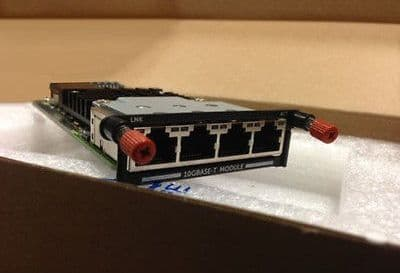
Compared with traditional 10G SFP+ modules that rely on optical fiber for transmission, 10GBASE-T operates over twisted-pair copper cables, typically Cat6a or above, and supports distances up to 100 meters. At first glance, this makes it appear more aligned with enterprise environments, where structured copper cabling is already widely deployed. Yet modern data centers are evolving, and the boundary between enterprise networks and data centers is becoming less rigid. To understand whether 10GBASE-T belongs in one, the other, or both, we need to examine its technical characteristics and deployment realities.
Understanding 10GBASE-T Technology
How 10GBASE-T Works Over Copper
10GBASE-T is defined under the IEEE 802.3an standard and enables 10 Gigabit Ethernet transmission over balanced twisted-pair copper cabling. Unlike optical transmission, which uses light signals, 10GBASE T relies on sophisticated digital signal processing and advanced modulation schemes to achieve high-speed data transfer across copper conductors. To maintain signal integrity at 10 Gbps, it employs techniques such as echo cancellation, forward error correction, and crosstalk mitigation.
This technical complexity is one reason why 10GBASE-T modules typically consume more power than fiber-based solutions. The signal processing required to overcome attenuation and interference over copper introduces additional heat generation and energy usage. As a result, thermal design and port density considerations become critical factors when evaluating 10GBASE-T for high-density switching environments.
Distance and Cabling Considerations
One of the strongest advantages of 10GBASE is its ability to support up to 100 meters over Cat6a or Cat7 cabling. In environments where copper structured cabling is already installed, upgrading to 10G can often be achieved without replacing the entire cabling system. This backward compatibility significantly reduces deployment costs and operational disruption.
However, not all copper cabling is equal. While Cat6 may support 10GBASE-T at shorter distances, achieving the full 100-meter reach typically requires Cat6a or better. In data centers where high-performance and predictable latency are critical, ensuring proper cable quality and installation standards is essential to avoid performance bottlenecks.
10GBASE-T in Enterprise Networks
Cost-Effective Upgrades
Enterprise networks often consist of office buildings, campus environments, and branch locations where copper cabling infrastructures are deeply entrenched. In these scenarios, 10GBASE offers a practical and cost-efficient upgrade path from 1G to 10G. Instead of deploying new fiber runs, organizations can reuse existing copper cabling, minimizing both material and labor expenses.
Additionally, many enterprise access switches and servers already feature RJ45 interfaces. Deploying 10GBASE simplifies compatibility, as network administrators can connect devices using familiar Ethernet patch cables without the need for fiber transceivers or specialized cleaning and handling procedures associated with optical connectors.
Flexibility and Simplicity
Operational simplicity is another reason 10GBASE-T fits well in enterprise environments. Copper patch cords are generally more robust in everyday handling compared to fiber, and technicians may find installation and maintenance more straightforward. For enterprises that prioritize ease of deployment and cost control over ultra-low latency or maximum port density, 10GBASE-T strikes a reasonable balance.
That said, enterprises with high-performance computing workloads or latency-sensitive applications may still prefer fiber-based connections in certain segments of their networks. The decision is rarely absolute and often involves a hybrid architecture.
10GBASE-T in Data Centers
Power and Thermal Constraints
Data centers operate under different design priorities compared to enterprise networks. High port density, energy efficiency, and thermal management are paramount. Because 10GBASE-T modules typically consume more power per port than fiber-based alternatives, large-scale deployments can significantly increase overall power consumption and cooling requirements.
In top-of-rack (ToR) switching scenarios where dozens of 10G ports are densely packed, even small differences in power usage per port can translate into substantial operational costs. For hyperscale or cloud data centers, where efficiency metrics are tightly monitored, fiber-based solutions often remain the preferred choice for large-scale aggregation and spine-leaf architectures.
Latency and Performance Expectations
Although modern 10GBASE-T implementations have reduced latency compared to early versions, copper-based transmission still introduces slightly higher latency than direct optical links. In many enterprise use cases, this difference is negligible. However, in data centers supporting high-frequency trading, real-time analytics, or distributed storage clusters, even microseconds can matter.
Therefore, in performance-critical data center segments, fiber connections often provide more predictable and lower-latency performance. This is particularly important in spine-leaf topologies where east-west traffic dominates and consistent performance is essential.
Where 10GBASE-T Makes Sense in Data Centers
Despite these limitations, 10GBASE-T is not entirely excluded from data centers. It can be suitable in specific scenarios, such as connecting legacy servers equipped with RJ45 ports, supporting management networks, or integrating with enterprise-style racks within colocation facilities. In smaller data centers or edge data centers, where port density is lower and infrastructure reuse is a priority, 10GBASE-T can be a practical and economical option.
Edge computing sites, in particular, may benefit from copper-based 10G links when simplicity and compatibility outweigh the need for maximum efficiency. In such cases, the trade-offs are manageable and aligned with operational goals.
Enterprise vs Data Center: A Matter of Priorities
Ultimately, the question is not whether 10GBASE-T is exclusively for enterprise networks or categorically unsuitable for data centers. Instead, the real issue lies in understanding the design priorities of each environment. Enterprise networks often value cost efficiency, infrastructure reuse, and operational simplicity, all of which align well with 10GBASE-T. Data centers, especially hyperscale facilities, prioritize density, power efficiency, and ultra-low latency, areas where fiber solutions frequently outperform copper.
As networking continues to evolve and edge computing blurs the line between enterprise and data center environments, the role of 10GBASE-T may expand in certain segments while remaining limited in others. Rather than viewing it as a second-tier alternative, it is more accurate to consider 10GBASE-T as a scenario-driven technology. When deployed in the right context, it delivers reliable 10G performance with economic and practical advantages. The key lies in aligning the technology choice with network architecture goals, workload requirements, and long-term operational strategy.
Disclaimer
The information provided in this article is for general informational and educational purposes only. While we strive to ensure accuracy, the content reflects current understanding of 10GBASE-T technology, enterprise networks, and data center environments at the time of writing and may not cover all possible scenarios. Network performance, suitability, and deployment outcomes can vary depending on specific infrastructure, equipment, and operational requirements. Readers should conduct their own technical assessments or consult with qualified network professionals before making any decisions regarding network design, implementation, or upgrades. The author and publisher assume no responsibility for any errors, omissions, or outcomes resulting from the use of this information.